BS in CS: Issue #8
All friction is bad

This continuing series explores common, but misleading and sometimes dangerous BS in CS. We will apply science to challenge faulty beliefs and suggest better alternatives.
Item #8: All friction is bad
You must always make things easier in the customer journey. That’s because people avoid effort whenever possible, so reducing their burden makes them happier. And Customer Effort Scores (CES) are more predictive than Net Promoter Scores (NPS), so it’s the company’s “True North.”
Except it’s BS. Effort isn’t the problem – wasted effort is. If the payoffs are sufficiently attractive, people will invest more energy to obtain them. And despite claims, CES is not a good predictor of account loyalty. Value-based decisions in business are complex, and frictionless experiences make limited impact. Like other types of customer feedback, CES is sometimes a helpful indicator, but it’s not a bellwether of what any single account will do.
Effort as Cost
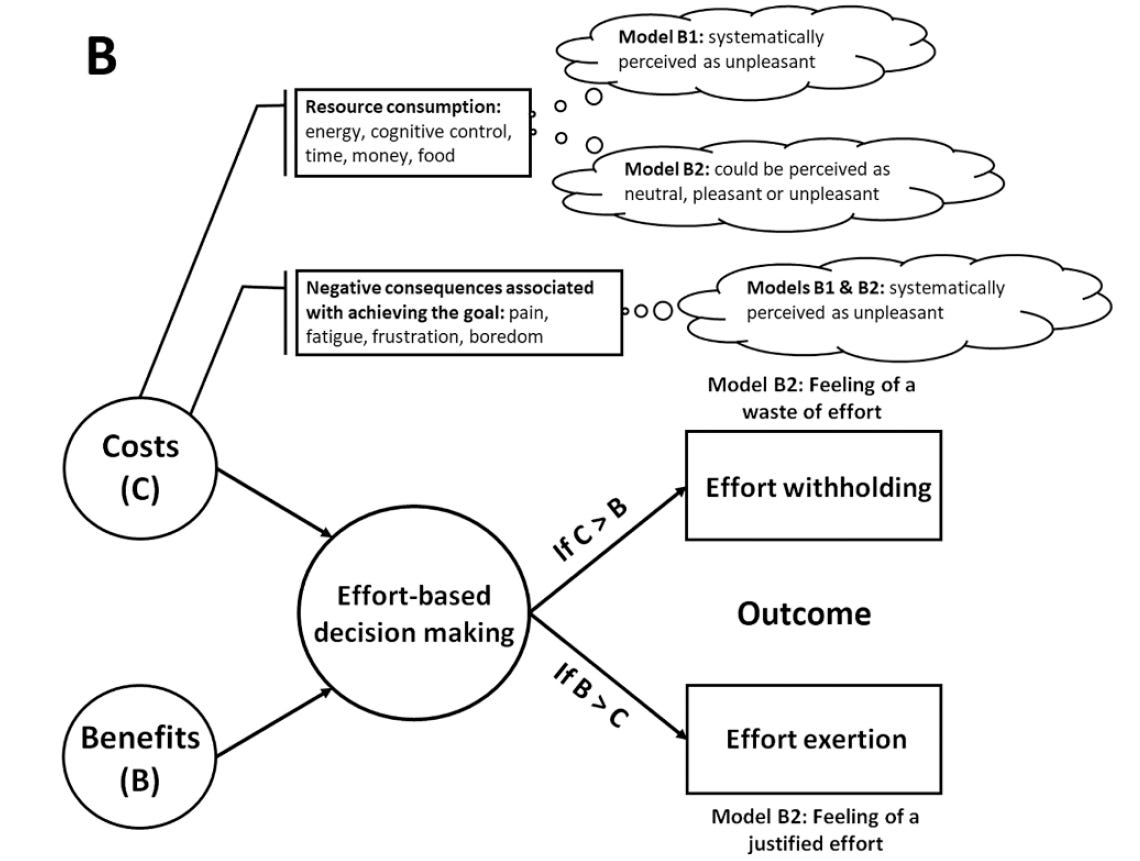
Most people believe in the “principle of least effort,” the notion that mental and physical exertion is aversive. But a recent scientific article challenges this idea (available for download below to paid subscribers). Citing computational neuroscience, childhood development, and functional magnetic resonance imaging (fMRI), the paper’s authors show the brain views effort like money: it invests it to get a return. In the body, energy supply and demand aren’t fixed, but vary according to situational constraints. The brain constantly monitors and adjusts its actions with respect to available resources, expending effort when and where it’s justified.
When making a choice, context affects how the brain incorporates effort into its value computations. When it perceives payoffs are equivalent between options, it favors the easier path. But when payoffs are significantly higher, the brain can invest more in that option. This explains why people commit to many years of postgraduate work to become a doctor. But the brain naturally resists losses, too. When it receives a small reward after substantial effort, it learns the juice isn’t worth the squeeze.
Researchers conclude that effort itself isn’t aversive. We expect things to come at a cost. We just try not to waste our efforts.
Effort and Satisfaction
Customer loyalty researchers have discovered similar nuances when it comes to effort. In a 2023 study (available below), academics found that indeed less effort correlated with higher satisfaction. Interestingly, however, the relationship was linear at lower levels and concave at higher levels, meaning it mattered only up to a point. The divergence depended on the type of interaction channel:
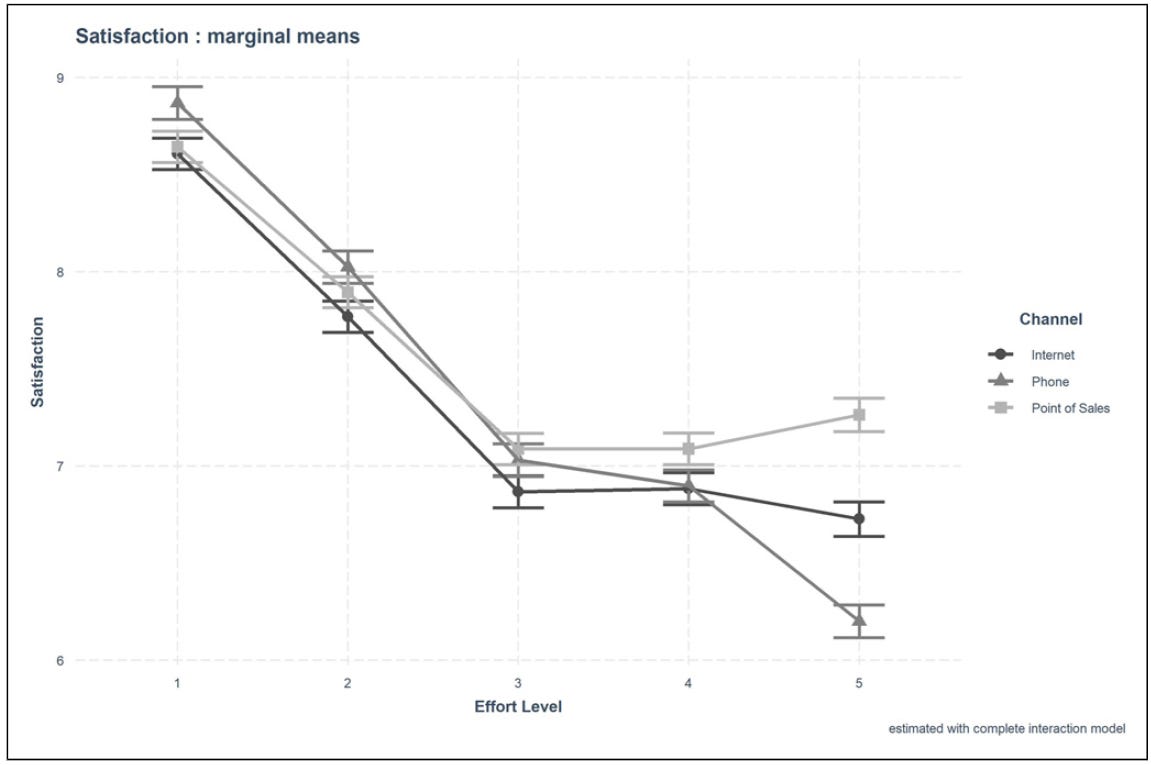
Researchers theorize that when the required effort is more pronounced, the inherent differences in each channel’s rewards come into play. People see more benefits interacting at a retail point of sale than phoning into a call center, making them willing to invest more effort in face-to-face interaction.
The study’s authors also found the type of purchase has an effect on willingness to make an effort. People invest less into “utilitarian” brands, such as insurance, banking, or ISPs, and more into “hedonic” brands like retail, cars, and food. What consumers consider acceptable effort is therefore relative and context-dependent.
CES
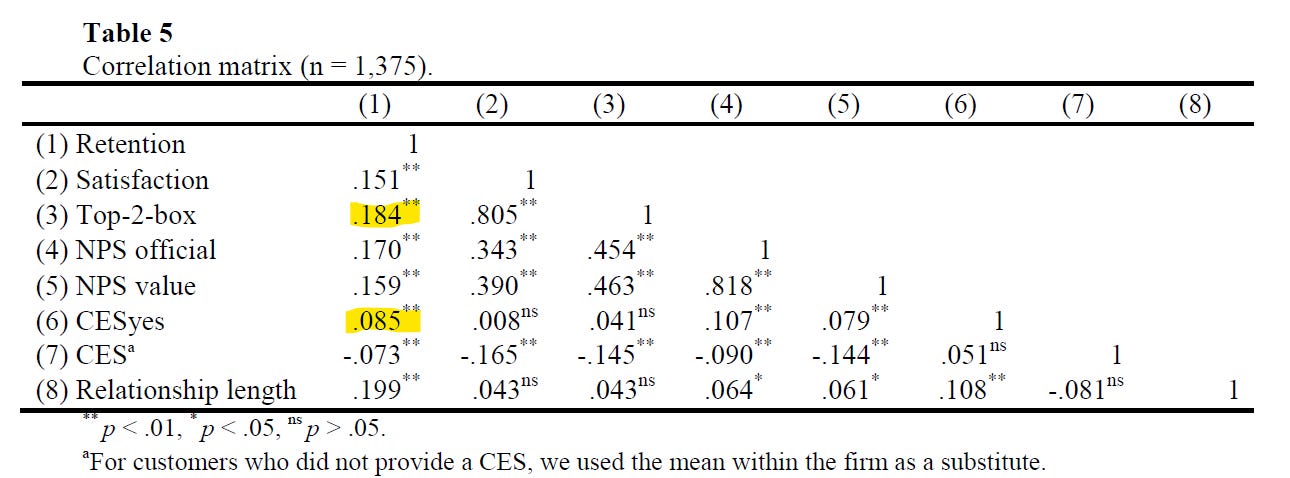
Although managers increasingly prefer Customer Effort Scores to NPS, they’re no more predictive. Researchers compared them in a comprehensive 2015 study (available below). They learned extreme customer satisfaction values (top-2-box) performed the best, but they were weakly correlated (r = 0.184) with loyalty behavior. CSAT was marginally better than NPS, and CES trailed far behind with a correlation of 0.085. That means while statistically significant, customer effort explained less than 1% of customer retention. And given other studies show customer feedback metrics are even less predictive for B2B, it’s clear that CES probably isn’t living up to its hype.
This doesn’t mean CES isn’t helpful. In certain industries, tracking it as part of continuous improvement initiatives has value. Like increasing quality, reducing effort for low-payoff tasks strengthens overall company competitiveness. The authors note:
Between-firm differences in [Customer Feedback Metrics] are more likely to affect retention than within-firm differences. For example, if a customer is relatively unsatisfied with the firm, but the firm outperforms its competitors on average customer satisfaction, the customer is left with few alternatives to choose from and will not likely switch to a competitor.
It’s too simplistic to think that all friction is bad. Customers are willing to invest more effort when greater rewards are expected. It’s a problem only when payoffs are equivalent and the extra effort is seen as wasteful. But even in that case, the loyalty impact is very small.
So rather than attempting to forecast a renewal based on a CES score, companies should instead learn if they’re significantly harder to do business with than the competition. Then they should take the appropriate steps to close the gaps.
